Ever since I went to the BTS concerts on July 17 and 18, 2026, in Paris, my Instagram algorithm has been showing me nothing but fancams from their stadium tour. On YouTube, I watched a few performances on music shows for comebacks by Korean artists I used to listen to 15–20 years ago, notably JYP (the one and only JYPAPI IS BACK!)… and that was enough for YouTube to suggest GIRLSET to me. Over and over again. I finally clicked on a performance video, just to get rid of the suggestion… Except that the melody intrigued me because the hook clearly has a few Bouyon* bars.
I’m not surprised. Ever since I started creating content about Caribbean music, I’ve always said there’s an Asian audience for our music (listen to my appearance on the Star Jee Show in 2022). Since the French (Afro) media have taken great pleasure in belittling “the Antilles people” ever since the year of self-disparagement in 2021 (listen to Our (Dis)Love for Zouk, Part 1 and Part 2), all the discussions and analyses I see about non-Caribbean artists who find success with Caribbean music genres get bogged down in the debate over cultural appropriation versus cultural appreciation… However, this distracting topic—which heats up WhatsApp groups and has the (Afro)French media clickbaiting whenever they can - prevents us from reflecting on the real issues I keep repeating episode after episode: branding, storytelling, MARKETING, and media training. These four pillars of the cultural and creative industries (CCI) make up media literacy—that is, the ability to effectively communicate about one’s creations to sell them.
The lamentation and outrage Office will always remain open, but I invite you, when you’re ready, to head over to the Karukerament reflection space to analyze this situation.

Reminder: A well-known K-pop group is promoting a song whose chorus has a Bouyon* sound.
branding - a global brand identity endorsed by the United States
1) It’s K-pop, but the production and songwriting for “CHAT” are handled by The Stereotypes. While the collective has won Grammys for its collaborations with Bruno Mars, it acknowledges in its bio that “K-pop saved them” during a period of uncertainty in the early 2010s. Of Haitian descent, Ray Romulus brings the Caribbean element to this multicultural team which collaborated with August Rigo to compose the song. Incidentally, it’s no surprise that Caribbean producers are making their mark in K-pop, as it’s an industry that’s always on the lookout for new sounds. Theron Thomas (British Virgin Islands), who is credited on “APT” by Rosé (BLACKPINK) and Bruno Mars, was already part of the writing team for “Seven,” the collaboration between BTS’s Jung Kook and rapper Latto. It’s also thanks to Theron Thomas that Kasey Phillips (Trinidad & Tobago) ended up working on ENHYPEN’s “No Doubt.” In fact, during our #streamcaribbean discussion in 2022, Kasey Phillips had already expressed his interest in K-pop. All of this goes to show that Caribbean influences in K-pop stem from the producers’ own backgrounds.
Storytelling—a musical genre recognized by algorithms
2) “CHAT” is not a Bouyon song. If you listen to the whole song, you’ll see that it’s just a bit of a mix. Still, it’s interesting that a K-pop group undergoing a rebrand chose Bouyon-style sounds for the hook of their song, because that’s the part that’s been shared on social media. Social media means algorithms. Algorithms mean connections based on keywords according to what the audience is searching for… Given how Theodora has developed her visual style over the past three years, the hyperpop genre fits perfectly with her artistic vision. With the international reach** of 1T1’s “Bouwéy” and Miimii KDS’s “Sé Miimii,” Bouyon is circulating well within the algorithms of this audience and producers, but is it identified as such? That wasn’t the case on Spotify in 2025, as I mentioned in my #streamcaribbean discussion with producer WiLDxFiRE.
3) In the press release picked up by Korean news sites (1, 2), “CHAT” is classified as Hyperpop. This is a well-documented musical genre, as shown in the French, English, and Korean Wikipedia pages are detailed and up-to-date. The press release makes no mention of Caribbean influences… But in any case, how can Bouyon be incorporated into the branding/storytelling when it isn’t well-documented? I’ll let you compare the French and English Wikipedia pages on Bouyon. Aside from Gemini’s AI overview, I haven’t found a dedicated page in Korean… So you could accuse them of cultural appropriation, but you’d first have to take on Hyperpop—the genre to which the agency attaches “CHAT.” That said, why not? The verdict in the ongoing “reggaeton vs. dancehall” lawsuit will set a precedent for discussions of this kind anyway. From a Karukerament perspective, the problem isn’t that Bouyon or other Caribbean influences aren’t mentioned. The problem is that there aren’t enough primary or secondary sources that POSITIVELY HIGHLIGHT these influences for it to become a marketing point worth citing.
marketing - A sexy, modern but not nasty girl power concept
4) The “egotrip” concept is explored here in the context of a chat room—a setting with which Gen Z and Millennial audiences can relate to, even if they haven’t had the same experience. MSN, Skype, MySpace, Facebook, Twitter, Instagram, Snapchat… The name of the platform changes, but the principle of communicating remotely has remained the same for the past thirty years. When the audience sings along to the lyrics, it won’t be about going out to party and forgetting their problems, but about feeling beautiful and having self-confidence. This is the simplest way to attract the widest possible audience over the long term. It’s a simplification to say that sex is the only thing that sells. With a male audience, that might be enough. But the female audience—which is the primary consumer of cultural products—has higher standards. It needs a story, even when selling sex. The more the story allows the female audience to feel good, the longer the story (and the artist’ career) will last. Of course, we could debate our perspective on time and the pace of a career, but that’s not the topic here. Unlike Shatta, who embraces its vulgar, raunchy side, Bouyon is marketed through its festive (vulgar) raunchy side… You can try to highlight the artistic work that goes into creating these songs as much as you want, but let’s be honest with ourselves: what is the digital legacy of 21st-century Bouyon? Social media posts without relevant keywords and/or hashtags will get lost in the algorithms instead of becoming the sources that allow us to keep track of this music genre—even a century from now. Where are the music videos, the articles, the fan reactions, the video essays, the theses and dissertations that examine Bouyon? Who is showcasing a facet of Bouyon as a music genre used to develop a sophisticated artistic vision? … It’s up to Dominica to lead this fight [listen to my #streamcaribbean discussion with Sobers Esprit], and up to the people of Guadeloupe to be a good ally.
In conclusion, launched by JYP Entertainment and Republic Records, GIRLSET is part of South Korea’s efforts to export its K-pop system through “global groups” like KATSEYE. “CHAT” hasn’t even been out for a month. It’s still unclear whether it’s a success. Let’s keep in mind that the one-million YouTube stream milestone still holds symbolic significance in France, but it’s a symbolic threshold that hasn’t existed for K-pop since 2012, when PSY’s “Gangnam Style” broke through. On the other hand, Koreans don’t view a song’s lifespan the same way, since they prioritize marketing, so I don’t think JYP Entertainment is currently tracking the number of streams for this project. Given the number of bonus videos uploaded within ten days, I think the agency is in the marketing test phase to profile the fanbase of the group—that is, the audience that will spend money. So it’s not the number of people watching that matters here. It’s about understanding who is watching. This brings us back to the importance of analyzing data, which I had already discussed in the #streamcaribbean conversation with KRYS in 2022 [read the English translation].
Will other K-pop agencies jump on the Bouyon trend, just like the Moombathon wave that swept through the second half of the 2010s? Maybe. Given how Baile funk inspired K-pop in the early 2020s, I think the agencies still have their work cut out for them before they explore Bouyon… That’s when the trolls who thrive on WhatsApp debates will come along and tell us, “Yeah, but music doesn’t belong to anyone anyway—you Caribbean folks don’t understand a thing.”
From a Karukerament perspective, we really don’t care if others make our music. It’s not even off-topic—it’s a non-issue. From Karukerament’s perspective, what matters is having a solid grasp of media literacy—that is, understanding the media so you know how to use them and communicate clearly and effectively. For Caribbean artists to reap the benefits of their creations, they must invest in the fundamentals… William Nicefield’s “Camino” went viral in the spring/summer of 2025, even though it was an AI-generated song. All it took was an eye-catching visual featuring a Korean person, playing on spirituality, and tapping into the “Caribbean” audience’s need for external validation for it to go viral on our social media platforms. DaProducer, the person behind this project, tried his hand at K-Zouk again by creating Black AI performers in the fall of 2025… and in the spring of 2026. Have you heard of it?
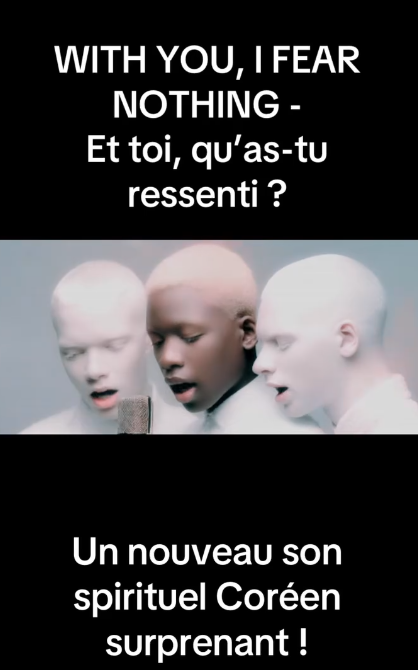
So the song and the visuals aren’t everything, but he is one of the few to use #Zouk as a hashtag, so he was identified in the algorithms. Perhaps Kaysha’s AI experiments will come up with a winning formula, but in the meantime, it’s the connection with the audience that still matters most. This is the card Caribbean artists—as human beings—need to play, especially those capable of performing with a live band, because live shows are our best export strategy [read my review of Lisa Gordon’s essay: “International Trade and the Music Industry: Live Music Services from the Caribbean”]. Provided, of course, that artists finally get down to the basics of marketing to build a local/regional ecosystem. Before thinking about red carpets, fancy outfits, cameras, or collaborations with X or Y in France, the United States, or Africa, we need to think about the local audience we want to attract, get to know that local audience, and then connect with it.
The music industries in the United States and France are aware that their 20th-century model no longer works, so they’re looking to South Korea for a fresh start. It’s not just about understanding production and distribution methods, but about understanding fan culture. Where I have reservations about their ability to reinvent themselves is that these industries do not view girl/boy bands the same way Asian countries do. Similarly, HYBE has ambitions for an international monopoly because the agency is beginning to position itself in African and Indian markets… Where I have reservations about HYBE’s ability to promote non-white, non-Korean artists is that one must understand the identity dynamics specific to each country. Just look at how Tyla still has to justify herself to the African American media for her use of the word “colored” as a South African woman. To understand these dynamics, they must give them importance. To give them importance, they must be aware of them. Once there is awareness, experts must be brought in to implement appropriate strategies—and those experts must be competent in these areas. Furthermore, I don’t believe in the monopoly model for developing ICCs. Collaboration between regions, yes. Just as Shenseea (Jamaica) and Jihyo (TWICE) did with “Distant Lover,” available since July 2026.
At the very least, indirect collaboration, like Bamby (French Guiana) did on the remix of “pAPi” from Major Lazer’s single—which featured tOKisCha (Dominican Republic) on the official version. But it’s up to each artist to figure it out for themselves. From a Karukerament perspective, it’s the Caribbean business model—small- to medium-budget production with a small team but global distribution—that’s best suited to how music is consumed in the 21st century. In any case, to the question “Can 21st-century Zouk be international Creole pop music?” that I asked in 2019, the answer was already yes, but the further we move forward in time, the clearer the challenges become and the tools are there [read the three-part “Zouk Uncovered” series]. The Caribbean business model will reach its full potential when the energy that artists pour into producing music to the point of exhaustion is also channeled into branding, storytelling, marketing, and media literacy efforts.
*Bouyon, jump up, soca—I’m not going to get into a debate about exactly which genre it is. Let’s just agree that it is not Afrobeats or amapiano, but rather Caribbean sounds.
**I don’t know what you mean by “international,” but if we’re just looking at Spotify and/or YouTube numbers—and I say this with the best of intentions—they have good results, but in what way are they exceptional? From a K-pop perspective, they aren’t. From a Karukerament perspective, they aren’t either… But if you’re using French standards to judge, why not?